

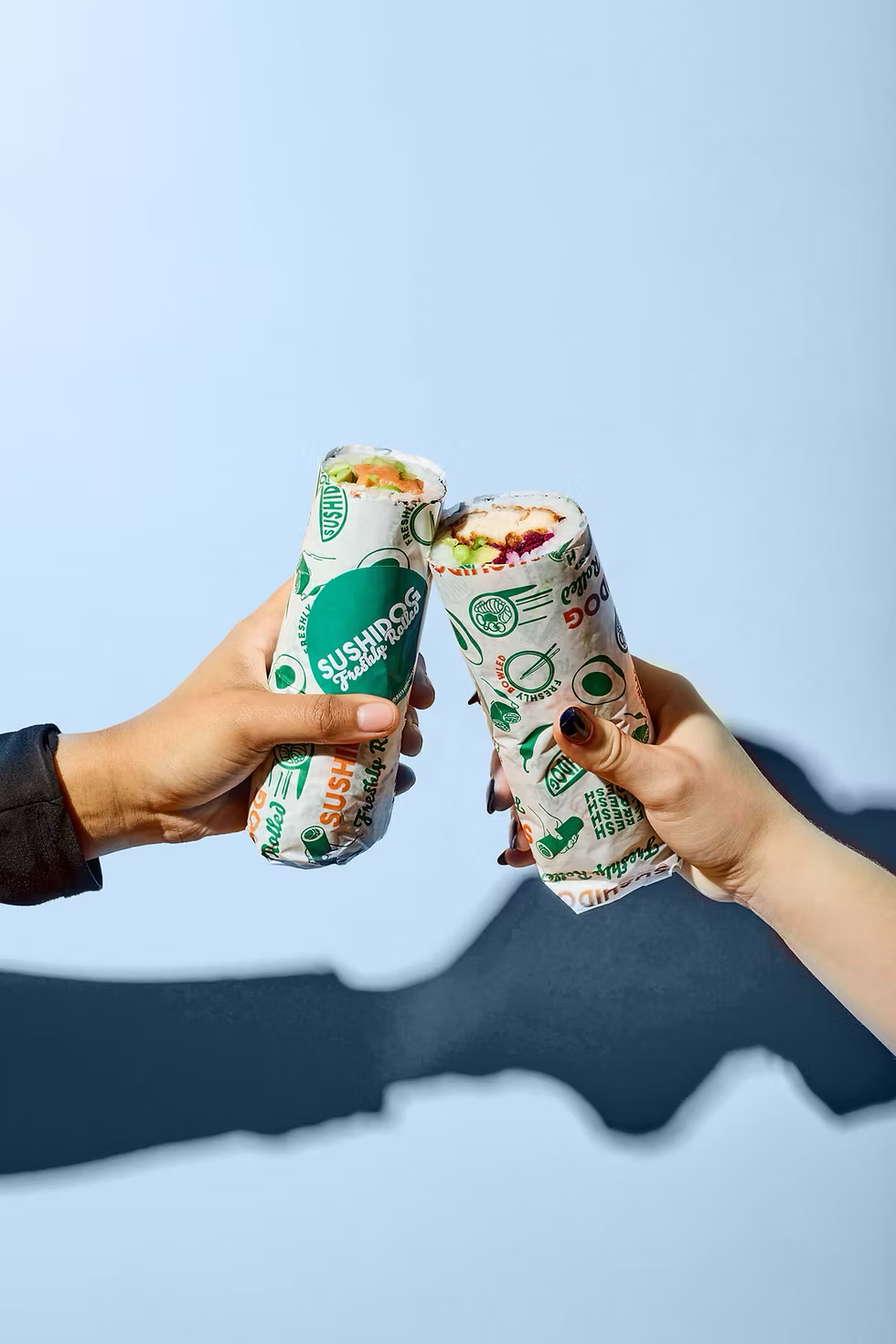
SushiDog – Marketing Strategy
Founded by Greg & Nick in 2018, SushiDog was created to provide grab and go SushiDogs, Sushi Bowls and Salads designed to be eaten on the go.
I was engaged by co-founder Greg to provide senior-level strategic marketing support across the business — effectively acting as a Fractional Marketing Director for this growing quick service hospitality brand.
How I helped SushiDog develop a diversified, data-driven hospitality marketing strategy with long-term resilience.
With ambitious regional expansion plans and a strong social media presence already in place, my focus with SushiDog was on:
Diversifying the marketing mix beyond social virality
Building more sustainable, conversion-led growth
Strengthening data-driven decision making
Developing the in-house team structure and leadership capability
Supporting long-term strategic planning and budgeting
"Clare brought all of her previous experience to help put in structured personal development plans for our marketing team, helped us build a clear strategy and budget for our financial year and mentored our marketing team throughout her time with us. The changes she made in terms of structure and process have helped to significantly develop our marketing team and we are now in a much stronger position as a result.
"I would strongly recommend working with Clare, as a smart and cost effective way to introduce senior marketing experience into the team without needing to fully commit to an in-house role if it is too early on to do so." - Greg Ilsen, SushiDog Co-founder
1. Diversifying the Marketing Mix
SushiDog had built impressive awareness through social media — but as many hospitality brands know, virality itself is not a strategy. Algorithms shift. Reach fluctuates. Conversion isn’t guaranteed. Over-reliance on social media created risk, particularly for a scaling hospitality business expanding beyond London. Awareness is powerful — but conversion, retention and frequency drive sustainable growth. My core recommendation was to de-risk growth by expanding beyond organic social. Together, we expanded focus to include:
Local store marketing
Loyalty strategy optimisation
Email marketing and CRM
Partnerships and community-building
Smarter use of paid media
This strategic steer was embedded into 2026 budget planning, with clear direction toward allocating experimental brand-building budget alongside performance channels.
2. Regional Expansion Strategy
Expanding regionally as a London-born brand comes with risk. Rather than replicating high-impact London launch tactics, I recommended a more locally sensitive approach. The focus shifted from “big launch moment” to long-term local trust building:
Prioritising local partnerships
Entering new regions with humility
Building local relevance before scale
Extending the “tail” of launch marketing activity beyond opening week
The in-house marketing team reflected this beautifully in their launch planning — ensuring post-launch momentum was sustained rather than front-loaded.
3. Embedding Data-Driven Marketing
Strong creative needs strong commercial grounding. A major part of my work as a Fractional Marketing Director for hospitality brands is ensuring data informs everyday decisions — not just quarterly reviews. Now embedded within SushiDog’s marketing rhythm:
Weekly channel performance analysis
Sales data reviews across sites, channels and day parts
Deep dives into loyalty performance
Ongoing optimisation of spend and tactics
Structured quarterly reflection sessions
This shift has strengthened confidence in decision-making and aligned marketing more closely with commercial performance.
4. Team Development & Leadership Support
A key part of the project focused on strengthening internal capability and leadership. For Catherine, Senior Marketing Manager, this included refining her role description in line with business growth, developing a clear PD plan, introducing a structured monthly reporting framework, and ongoing mentoring across 2026 strategy and budgeting — enabling her to step confidently into a more strategic leadership position.
For Megan, Content & Community Manager, I refined her role and PD plan while mentoring her on reporting discipline, linking social strategy to wider business objectives, taking creative risks and building deeper community engagement — evolving her remit from simply posting content to driving measurable business impact.
Results & Impact
While many outcomes are long-term and structural rather than campaign-specific, key shifts include:
Reduced strategic reliance on social virality
More resilient and diversified marketing mix
Stronger local connection in regional openings
Improved reporting clarity and decision-making confidence
Elevated leadership capability within the marketing team
Most importantly, SushiDog now operates with greater strategic control of their marketing — rather than reacting to channel performance fluctuations.